


Wholesale Supply for Automotive Workshops: Daily-Use Fluid Programs
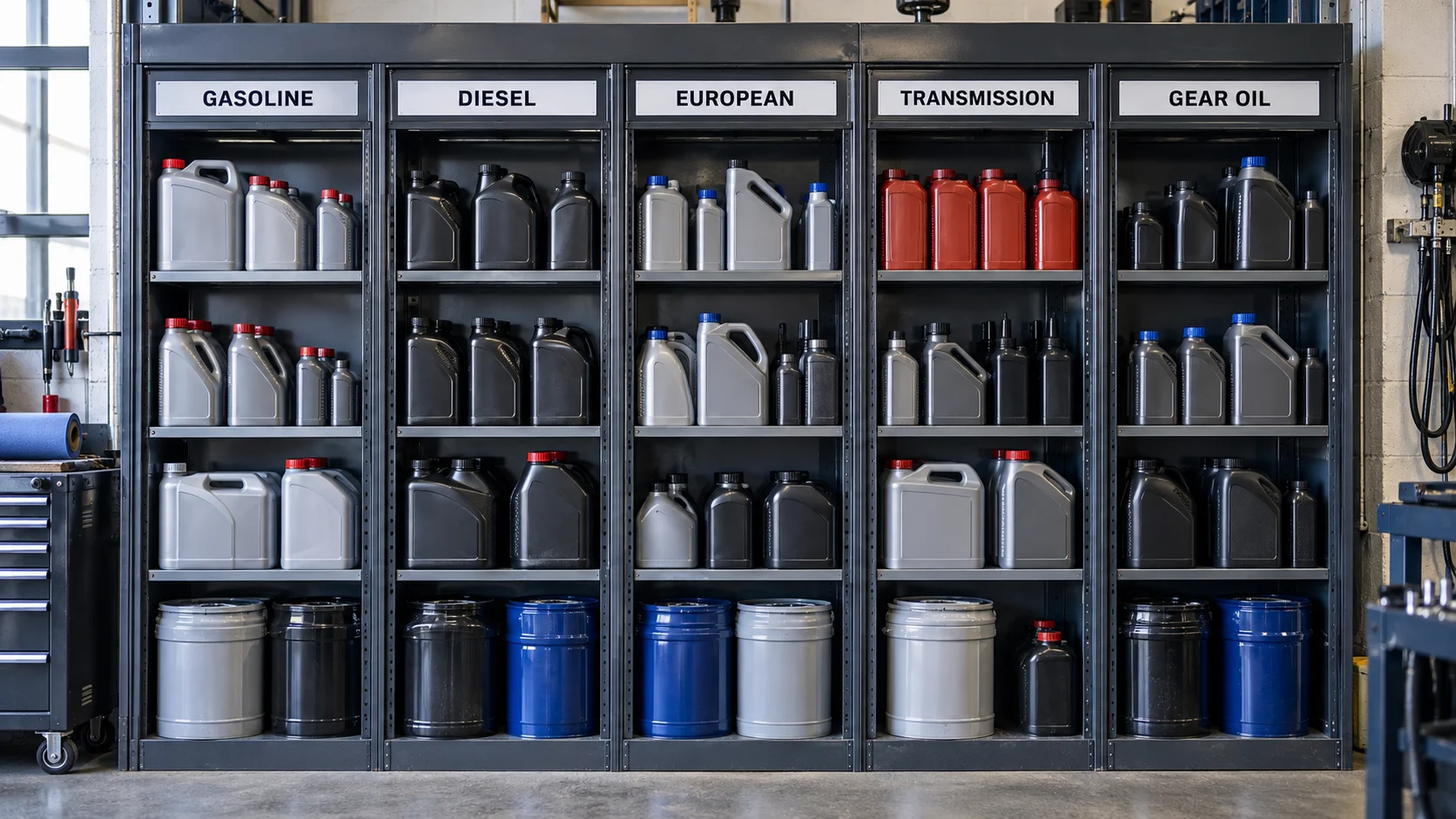
A useful workshop fluid program starts with completed repair orders, not a generic line card. Identify what the shop services, which specifications appear repeatedly, how much of each product moves, and what must remain available for less common work.
The result should be a controlled list of engine oils, transmission and driveline fluids, brake fluids, greases, chemicals, accessories, and dispensing equipment. Each line needs an exact application, reorder point, package size, and source document.
What belongs in a daily-use workshop fluid program?
Include products that support work the shop performs regularly. Separate high-volume fluids from specialist coverage and occasional service items.
| Program layer | Examples | Buying approach |
|---|---|---|
| Core engine oils | Common gasoline and light-diesel viscosities | Set minimum and maximum inventory from actual use |
| Heavy-duty oils | CK-4 grades for trucks or equipment the shop services | Match engine maker, viscosity, and duty cycle |
| European engine oils | ACEA and OEM-specific products | Stock only around verified vehicle demand |
| Transmission fluids | Dexron-, Mercon-, JWS-, SP-, CVT-, or other application-specific fluids | Identify the transmission and exact fluid requirement |
| Gear and differential oils | GL-4, GL-5, limited-slip, and OEM fluids | Keep synchronizer and differential requirements separate |
| Brake fluids | DOT 3, DOT 4, or manufacturer-specified fluid | Control moisture exposure and use sealed containers |
| Greases | General-purpose, high-temperature, moly, marine, or application-specific grease | Match thickener, NLGI grade, load, speed, temperature, and water exposure |
| Chemicals and sealants | Brake cleaner, multi-purpose lubricant, RTV, contact cleaner | Verify substrate, cure, temperature, and safety requirements |
| Accessories and equipment | Gloves, pumps, meters, grease guns, reels, and transfer equipment | Match product, container, throughput, and service-bay layout |
Do not stock a category because other shops do. Stock it because the work order history or planned service menu supports it.
How do you use repair orders to build the product list?
Review at least one representative business cycle and group completed jobs by specification. Ninety days may be enough for a stable quick-lube operation; a shop with seasonal or contract work may need six to twelve months.
For each line, record:
- Vehicle year, make, model, and engine or transmission.
- Required viscosity and performance specification.
- Quantity used per service.
- Number of services per month.
- Current product and package.
- Emergency or same-week purchases.
- Leftover inventory.
- Returns, leaks, mixing events, or misapplications.
Then identify the small number of products that drive most volume. Those are candidates for larger formats or tighter reorder controls. Low-volume specialist products may remain in sealed individual packages.
How should engine oils be selected?
Select engine oil from the manufacturer requirement, then choose the product tier and format. The SAE grade alone does not establish the API, ILSAC, ACEA, or OEM performance needed.
The American Petroleum Institute maintains current and obsolete engine-oil categories and advises users to follow the vehicle manufacturer’s recommendation.1 Where API marks are claimed, verify the exact product and viscosity through the EOLCS directory.2
For a mixed workshop, separate at least:
- current gasoline requirements;
- older gasoline requirements still present in the customer base;
- modern European low- or mid-SAPS requirements;
- light diesel;
- heavy-duty CK-4;
- any FA-4-approved applications;
- specialty viscosities.
API states that FA-4 is not interchangeable or backward compatible with CK-4.1 A shop should not merge those lines to simplify inventory.
Which Inforca engine-oil lines fit workshop programs?
Inforca’s current website positions PureGuard for U.S.-made daily-use programs and MANNOL for premium German positioning, European requirements, and broad engine and driveline coverage.3
Examples visible in the active range include:
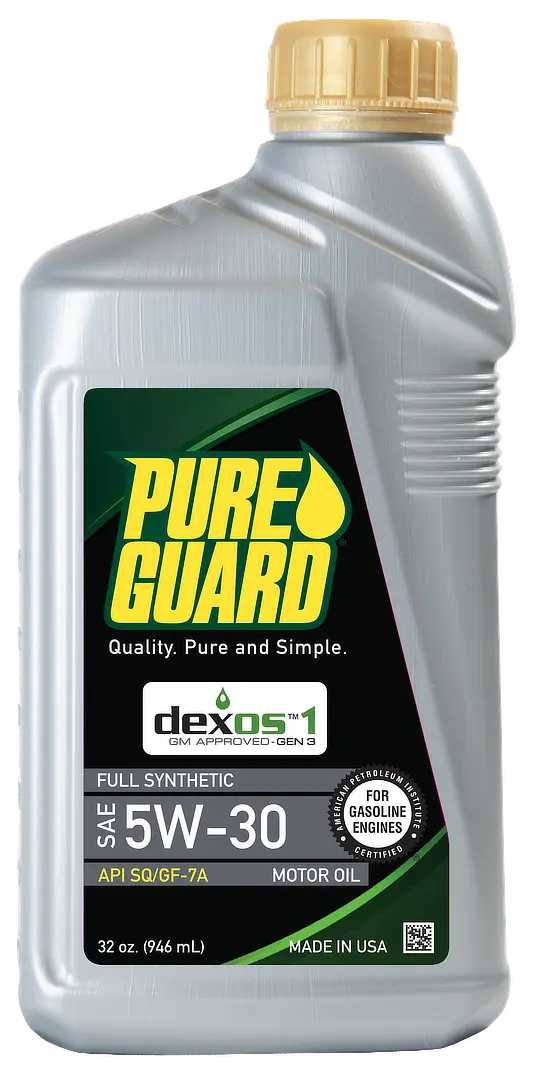
- PureGuard full-synthetic SAE 0W-20, 5W-20, 5W-30, Euro 5W-40, and 10W-30;
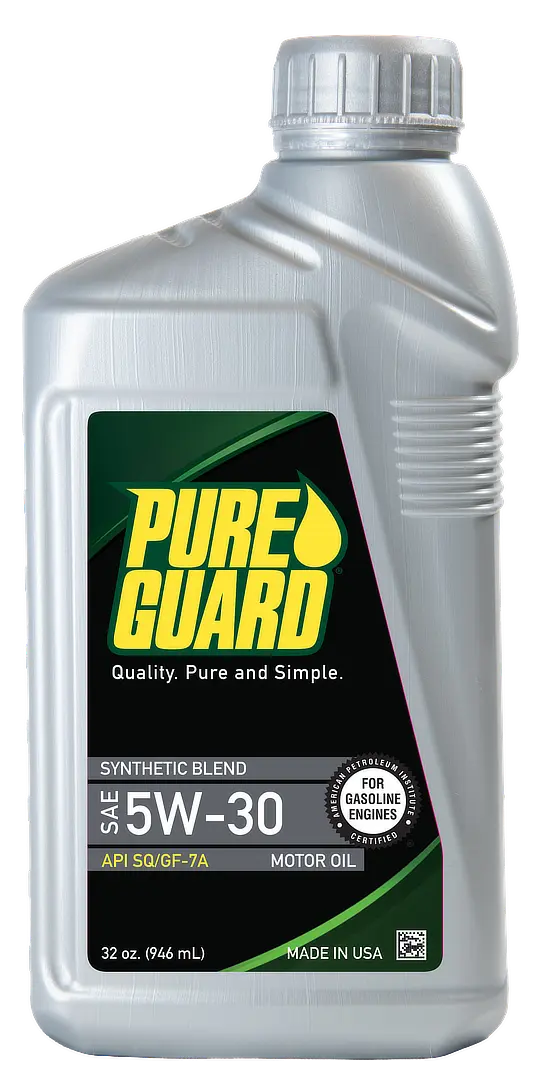
- PureGuard synthetic-blend SAE 5W-20, 5W-30, 10W-30, and 10W-40;
- PureGuard heavy-duty SAE 10W-30 and 15W-40 products presented with CK-4 variants;
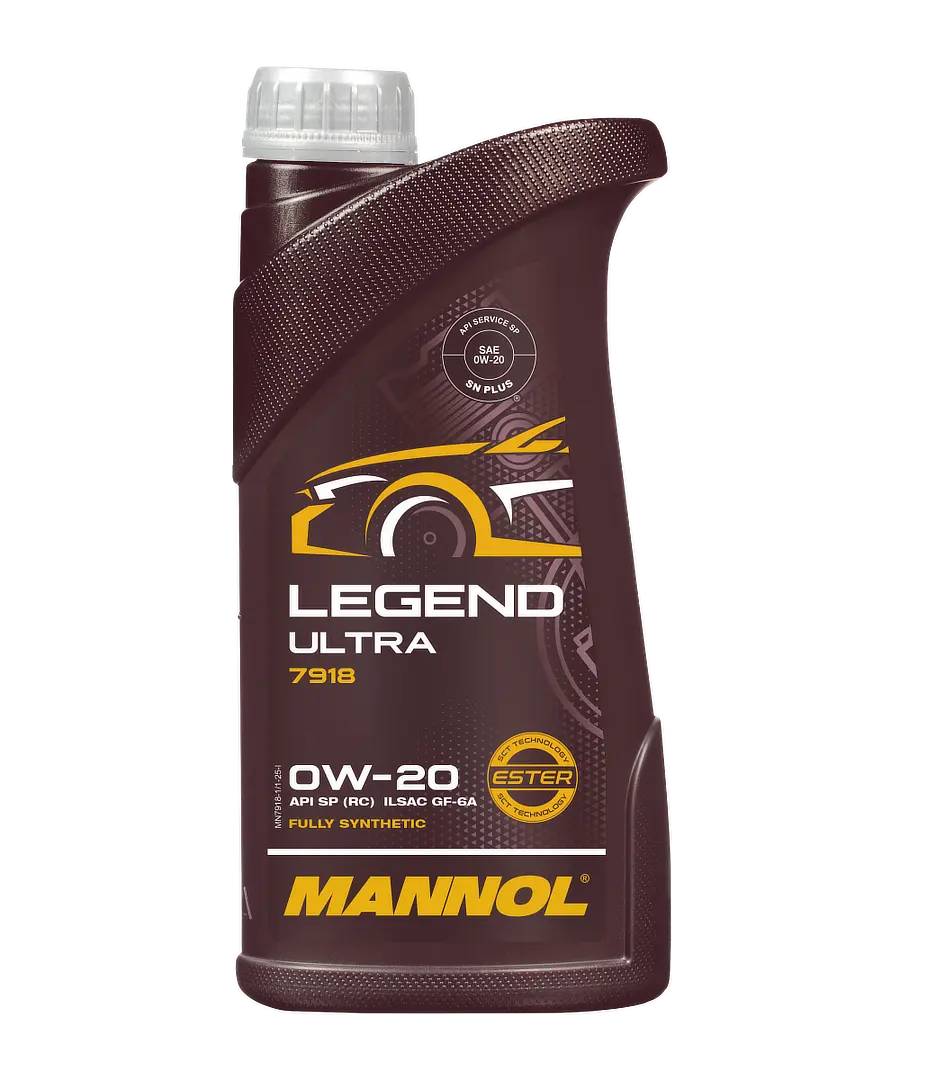
- MANNOL Legend Ultra 0W-20 API SP Resource Conserving / ILSAC GF-6A;
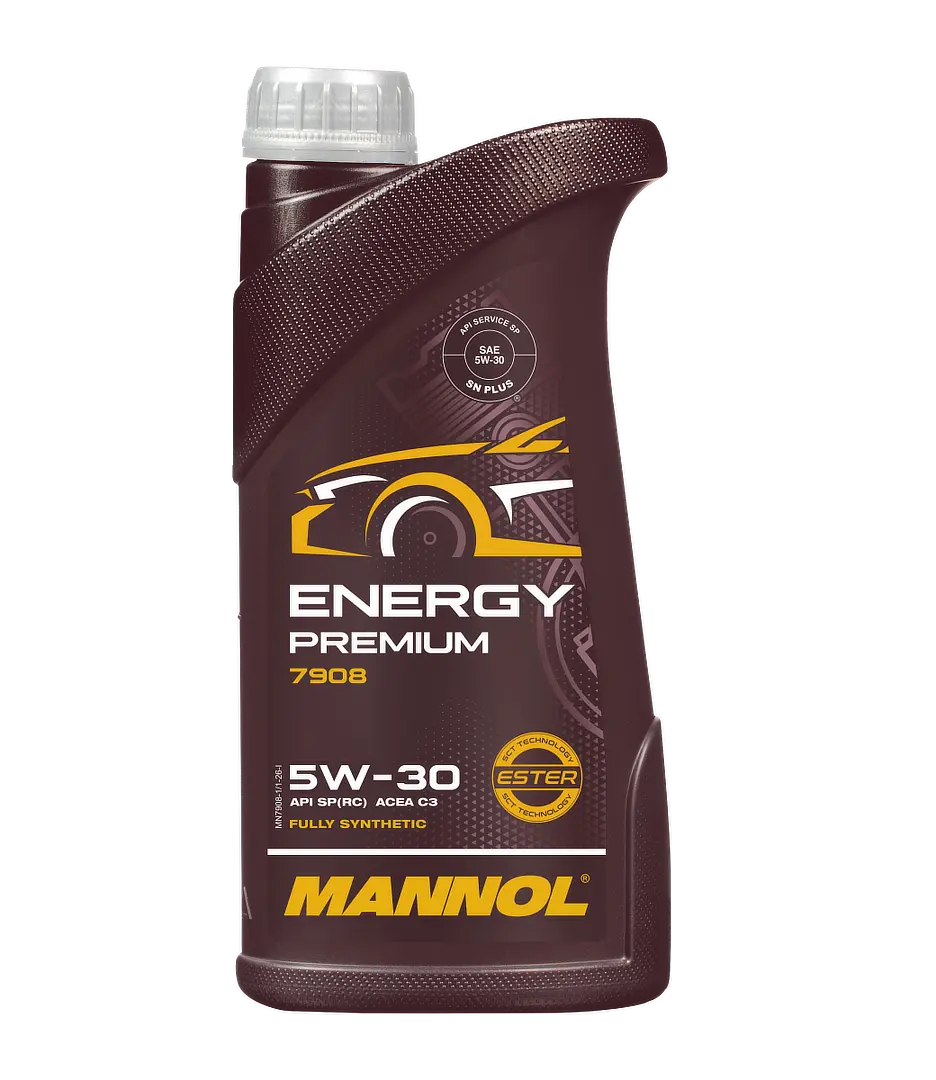
- MANNOL Energy 5W-30 API SN/CH-4;
- MANNOL Energy Formula PD 5W-40 API SP;
- MANNOL TS-series heavy-duty CK-4 oils.4
These examples describe portfolio coverage, not universal application or current stock. Match the exact product document to the vehicle before adding it to the program.
How should a shop build transmission-fluid coverage?
Build transmission coverage around the units the shop actually services. “Universal ATF” is not a complete fluid requirement.
Inforca’s current transmission page lists MANNOL Automatic Plus ATF Dexron III, MANNOL ATF CVT, MANNOL ATF Multivehicle JWS 3309, and PureGuard automatic-transmission products including Multipurpose and Full Synthetic Global ATF.5
For each stocked fluid, maintain:
- exact product name and SKU;
- transmission or fluid specifications covered;
- applications explicitly excluded;
- current TDS;
- sealed package or dedicated dispensing point;
- reorder level;
- approval process for substitutions.
Do not use fluid color as the selection method. Confirm the transmission type or code and the current OEM requirement.
How should gear oils, brake fluids, and grease be organized?
Keep visually similar products physically and digitally distinct. Gear oils, brake fluids, and greases can share a purchase order but should not share an undefined inventory category.
Inforca’s active examples include MANNOL GL-4/GL-5 and limited-slip gear oils; PureGuard SAE 75W-90 and 85W-140 GL-5 gear oils; PureGuard DOT 3 and DOT 4 brake fluids; and application-specific MANNOL and PureGuard greases.4
For gear oil, confirm SAE viscosity, API GL category, OEM requirement, and limited-slip or synchronizer needs. For brake fluid, confirm the DOT or OEM requirement and control open-container exposure. For grease, record the NLGI grade, thickener, base-oil viscosity, additives, load, temperature, speed, water exposure, and compatibility with the grease already in service.
Which chemicals and accessories can share the order?
Add shop products only when their use and safety information are defined. Inforca’s current website shows MANNOL brake cleaner and M-40 multifunction lubricant, plus black nitrile gloves in Medium, Large, and X-Large.46
Do not select RTV by color alone. Do not assume one cleaner is safe for every surface or energized component. Use the current product and safety data for the job.
Inforca is also adding MATO grease guns, pumps, and dispensing equipment. The active model list is being finalized, so buyers should send the lubricant, container, throughput, and application details for model and availability confirmation.7
How do you choose package sizes?
Choose the smallest format that supports reliable supply without creating excessive handling, and the largest format that the shop can turn, store, and dispense cleanly.
Use:
- monthly quantity by exact product;
- high and low demand;
- supplier lead time;
- available floor or rack space;
- lifting and transfer method;
- expected residual product;
- misapplication risk;
- number of bays sharing the fluid.
Cases and smaller packages help with low-volume specifications. Pails or drums can fit stable mid-volume products. Totes or tank delivery require predictable demand and dedicated infrastructure.
Package availability varies by exact product. Obtain written confirmation before designing a storage system around one presentation.
How should reorder points be set?
Set a reorder point for every critical SKU using expected demand during lead time plus a defined safety quantity. Do not use one reorder percentage for the entire stockroom.
Reorder point = expected use during confirmed lead time + approved safety quantity
Review the setting when demand, lead time, service mix, or package size changes. Track emergency purchases and stockouts; both indicate that the record or reorder rule needs attention.
The supplier should state whether a product is stocked, ordered regularly, or special order. “Available” without a lead time is not enough for a service program.
How can a shop prevent fluid mixing?
Use one identity from purchase order to dispenser. The product name, viscosity, and specification should match on the container, storage position, pump, hose, and work-order selection.
Control points include:
- receiving check against the purchase order;
- sealed and clearly labeled storage;
- dedicated or verified-clean transfer equipment;
- restricted substitution rights;
- separate used-oil and waste-fluid containers;
- technician access to current product data;
- inventory movements tied to work orders;
- routine inspection for leaks and damaged labels.
API publishes bulk-oil chain-of-custody and quality-documentation guidance in API 1525A and handling and storage guidance in RP 1525.89
What should a workshop supplier confirm?
Ask the supplier to confirm:
- Exact product match and claim basis.
- Current TDS and SDS.
- Package sizes by SKU.
- Stocked, regular-order, or special-order status.
- Minimums and lead times.
- Delivery coverage and receiving requirements.
- Substitution procedure.
- Damage and shortage procedure.
- Technical contact.
- Reorder process.
Inforca provides a customer portal for technical documents, catalogs, training resources, and direct support.10 Confirm portal access and document availability for the account during onboarding.
Frequently asked questions about workshop fluid programs
How many motor oils should a shop stock?
There is no universal number. Use the vehicle mix, specifications, service volume, storage, and supplier lead times to build the list.
Should every high-volume oil go into a drum or tank?
No. Evaluate turnover, receiving, dispensing equipment, contamination controls, residual product, and the supplier’s format terms.
Can one multi-vehicle ATF replace all transmission fluids?
No. It can consolidate only the applications covered in its current product data and accepted by the vehicle or transmission manufacturer.
Can MANNOL and PureGuard be used in the same workshop program?
Yes, when each selected product matches its application. The two brands serve complementary portfolio roles; the specification controls each service.
Can SCT products be added to the program?
SCT Lubricants is part of Inforca’s current portfolio, but product-level selection requires the finalized catalog and current technical documents.
Build the list from your repair orders
Send Inforca your monthly service volume, common makes, viscosities, required specifications, current order sheet, package preferences, and delivery ZIP code. The team can compare MANNOL and PureGuard coverage, identify related shop products, and confirm current sizes and availability.
Sources
Footnotes
-
American Petroleum Institute, Oil Categories, accessed September 10, 2026. ↩ ↩2
-
American Petroleum Institute, Engine Oil Licensing & Certification System, accessed September 10, 2026. ↩
-
Inforca International, Brands, accessed September 10, 2026. ↩
-
Inforca International, Products, accessed September 10, 2026. ↩ ↩2 ↩3
-
Inforca International, Transmission Fluid Solutions, accessed September 10, 2026. ↩
-
Inforca International, Accessories, accessed September 10, 2026. ↩
-
Inforca International, MATO Lubrication Equipment, accessed September 10, 2026. ↩
-
American Petroleum Institute, API 1525A overview, accessed September 10, 2026. ↩
-
American Petroleum Institute, RP 1525 overview, accessed September 10, 2026. ↩
-
Inforca International, Customer Portal, accessed September 10, 2026. ↩
Related Inforca products
Check each product's data sheet against your exact specification before ordering.
Send us the application, specification, and volume — our team will confirm the right product and format.
Talk to Inforca