


GL-4 vs. GL-5 Gear Oil: When to Use Each
API GL-4 and GL-5 are gear-lubricant service designations, not viscosity grades and not a simple old-to-new sequence. GL-4 is associated with certain manual transmissions and moderate-to-severe gear service. GL-5 addresses high-speed shock load, high-speed low-torque, and low-speed high-torque service typical of hypoid axles.1
Use the designation, SAE viscosity, and any OEM specification required for the exact gearbox or axle. GL-5 is not an automatic substitute wherever GL-4 is specified.
What is the practical difference between GL-4 and GL-5?
The practical difference is the service environment and performance package for which the lubricant is qualified.
| Question | API GL-4 | API GL-5 |
|---|---|---|
| Typical service | Selected manual transmissions, transaxles, and axles under moderate to severe conditions | Axles — especially hypoid gears — under high-speed or shock-load and high-torque service |
| Extreme-pressure performance | Appropriate to GL-4-defined service | Higher hypoid-gear load protection under GL-5-defined tests |
| Automatic substitution? | Use where specified | Do not assume it replaces GL-4 in synchronized transmissions |
| Viscosity | Separate SAE J306 choice | Separate SAE J306 choice |
| Limited-slip behavior | Not established by GL-4 alone | Not established by GL-5 alone; LS requirements are separate |
API Publication 1560 defines the service designations and is intended to help select lubricants by gear design and operating conditions.1 The equipment manufacturer still controls the application.
Is GL-5 better than GL-4?
It is better for a GL-5 application, but not universally better. A differential with hypoid gears may need the load-carrying performance represented by GL-5. A synchronized manual transmission may require GL-4 because its synchronizer materials and shift behavior were validated with that fluid type.
“Higher number” is therefore the wrong selection rule. The correct question is: what does this component require?
Can GL-5 damage synchronizers?
Do not reduce the issue to a blanket claim that every GL-5 oil damages yellow metal. Modern formulations differ. The operational concern is whether the complete fluid — including friction behavior, corrosion performance, viscosity, and OEM coverage — is approved or recommended for that synchronized transmission.
Synchronizers depend on controlled friction. A fluid designed mainly for axle service may shift differently even if its metal-corrosion performance is acceptable.
Use a dual-rated GL-4/GL-5 product in a manual transmission only when its manufacturer explicitly lists that transmission application or required OEM standard.
Is GL-4 or GL-5 the viscosity?
Neither. SAE viscosity and API service designation answer different questions.
- SAE 75W-80, 75W-90, 80W-90, or 85W-140 describes viscosity behavior under defined tests.
- API GL-4 or GL-5 describes a service/performance category.
- OEM specifications add manufacturer-specific requirements.
- LS or limited-slip positioning addresses differential friction needs and may require a specific additive system.
A 75W-90 GL-5 and an 85W-140 GL-5 share a service category but are not the same viscosity. A 75W-90 GL-4/GL-5 product and an axle-only 75W-90 GL-5 product may not serve the same components.
What about limited-slip differentials?
API GL-5 alone does not confirm the friction response needed by every limited-slip differential. Some products include limited-slip additives; some differentials require a separate additive; others prohibit it.
Confirm:
- axle model;
- required SAE grade;
- GL service category;
- limited-slip type;
- OEM specification or part number;
- whether an additional friction modifier is required.
Chatter can have more than one cause. Do not add friction modifier without the axle maker’s procedure.
Which Inforca gear oils have documented GL coverage?
Inforca lists several MANNOL and PureGuard driveline products in its current portfolio.2
| Product | Documented category | Published application position |
|---|---|---|
| MANNOL Hypoid 80W-90 GL-4/GL-5 LS | SAE 80W-90; API GL-4/GL-5; limited-slip positioning | Manual gearboxes and heavily loaded axles where its listed coverage applies |
| MANNOL Unigear 75W-80 GL-4/GL-5 LS | SAE 75W-80; API GL-4/GL-5; limited-slip positioning | Manual transmissions and driveline applications covered by its data sheet |
| MANNOL TG-2 Hypoid 75W-90 | SAE 75W-90; API GL-4/GL-5 | Gearboxes and axles where the listed specifications match |
| MANNOL Hypoid LSD 85W-140 | SAE 85W-140; API GL-5 | Heavily loaded hypoid and limited-slip differential applications |
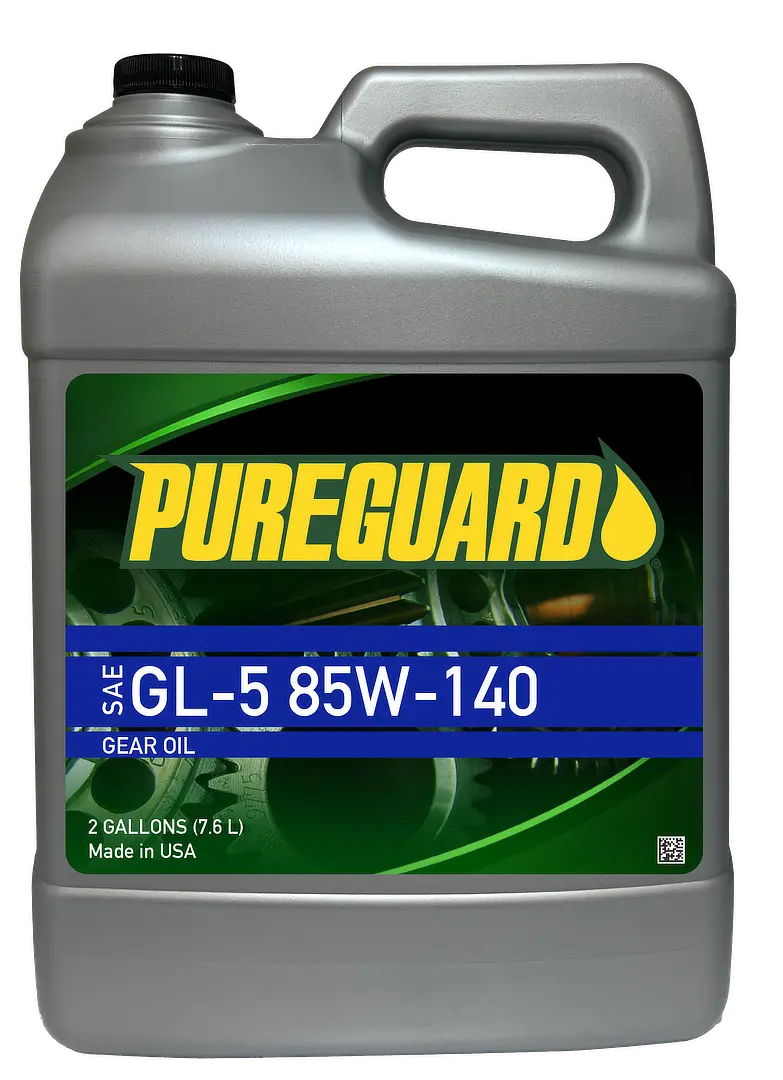
| PureGuard GL-5 85W-140, PG702 | SAE 85W-140; API GL-5 | Heavy-duty hypoid axle service |
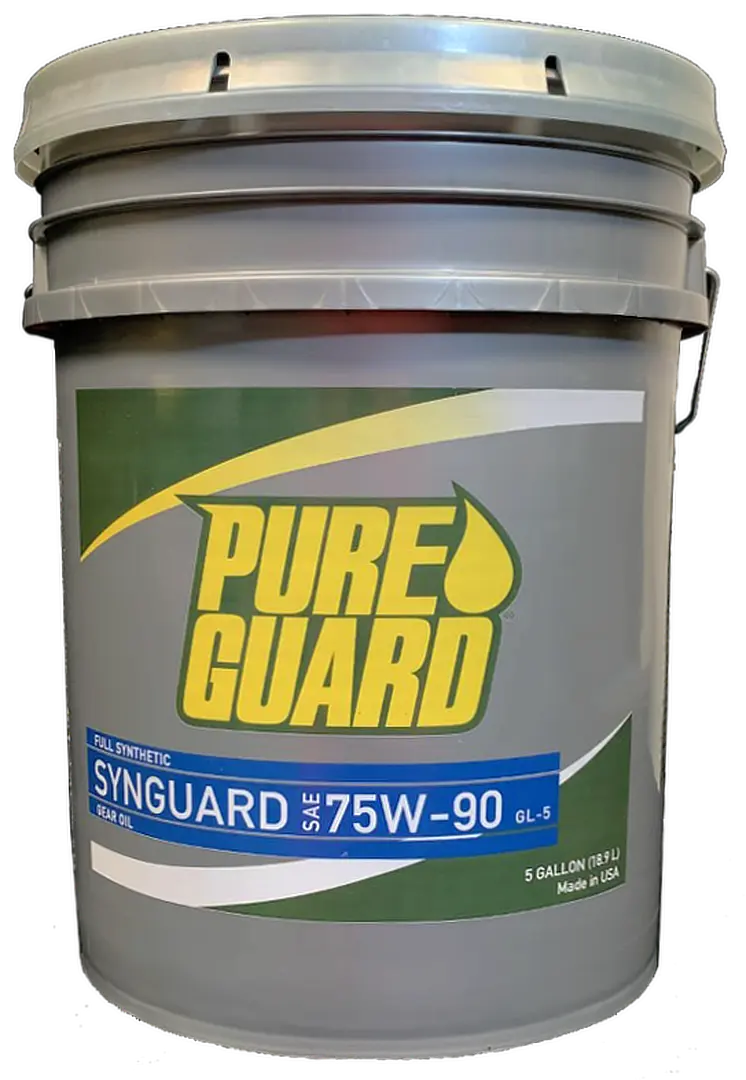
| PureGuard SynGuard 75W-90, PG703 | SAE 75W-90 synthetic gear lubricant | Confirm current API and OEM coverage from the current data sheet |
A dual rating printed on a product does not override the vehicle manual. Match the exact component and specification, and verify whether the data sheet uses “approved,” “meets,” or “recommended for.”
How should a shop choose between GL-4 and GL-5?
Use this order:
- Identify the component: manual gearbox, transaxle, transfer case, or axle.
- Record the model or build code.
- Find the OEM fluid specification and part number.
- Confirm the SAE viscosity.
- Confirm the API GL category.
- Check limited-slip or synchronizer requirements.
- Compare the current product data sheet line by line.
- Record the selected SKU in the shop’s fluid matrix.
Do not select by bottle color, smell, “synthetic” alone, or what fits another axle from the same manufacturer.
Frequently asked questions about GL-4 and GL-5
Can I use GL-5 in a transmission that calls for GL-4?
Only if the transmission manufacturer or the fluid manufacturer’s documented application guidance explicitly covers that unit and requirement.
Can GL-4 be used in a GL-5 differential?
Not by default. GL-4 does not establish the GL-5 performance required for severe hypoid axle service.
Does 75W-90 tell me whether the oil is GL-4 or GL-5?
No. It states viscosity. Read the service category and OEM coverage separately.
Is a dual-rated GL-4/GL-5 oil safe in every gearbox and axle?
No. Dual rating broadens documented performance, but the component’s friction, viscosity, and OEM requirements still apply.
Does a limited-slip differential always need an LS additive?
No. Requirements differ by design and factory fill. Follow the axle maker’s procedure.
Confirm the component before choosing gear oil
Send Inforca the vehicle or equipment, gearbox or axle model, OEM fluid number, SAE grade, GL category, limited-slip status, service volume, and preferred pack size. Inforca can compare the current product documents and confirm availability.
Sources
Footnotes
-
American Petroleum Institute, Publication 1560: Lubricant Service Designations for Automotive Manual Transmissions, Manual Transaxles, and Axles, accessed September 10, 2026. ↩ ↩2
-
Inforca International, MANNOL Active Product Families, accessed September 10, 2026. ↩
Related Inforca products
Check each product's data sheet against your exact specification before ordering.
Send us the application, specification, and volume — our team will confirm the right product and format.
Talk to Inforca