


Can I Buy Engine Oil in Bulk?
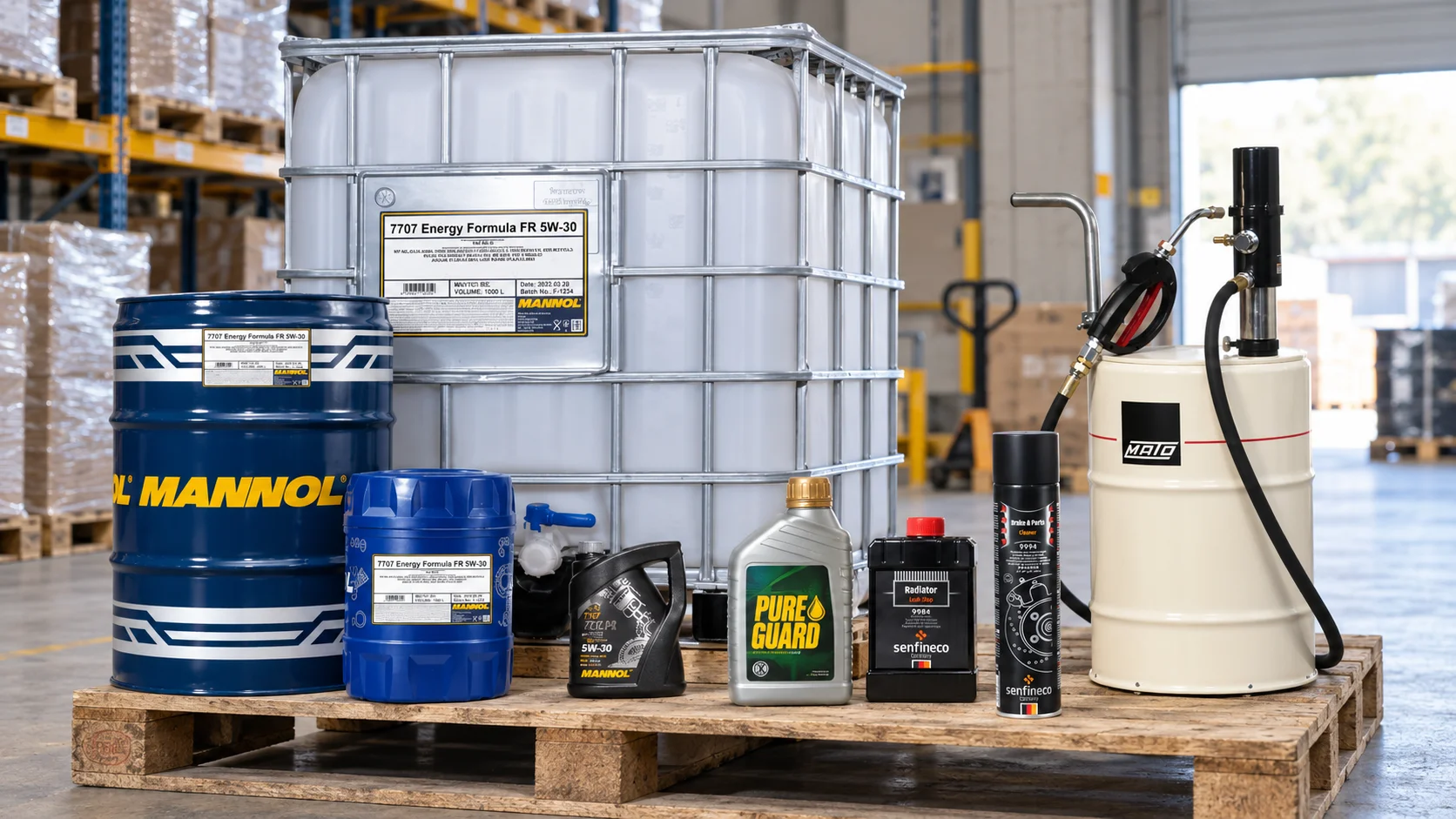
Yes. A shop, fleet, reseller, or industrial operation can buy engine oil in larger commercial formats when the correct product and a workable supply arrangement are available. Confirm the engine specification, monthly usage, package or delivery format, storage system, dispensing controls, and current supplier terms before ordering.
“Bulk” does not identify the oil. It describes how the oil is packaged or delivered. The engine still requires the correct SAE viscosity and API, ILSAC, ACEA, or OEM performance specification.
What does buying engine oil in bulk mean?
The word bulk is used loosely in lubricant purchasing. It may refer to cases, pails, drums, intermediate bulk containers, or metered delivery into a storage tank.
API 1525A uses a narrower technical definition: bulk engine oil is oil dispensed and delivered in metered quantities.1 In everyday purchasing, buyers often use the term for any format larger than retail bottles.
State the format you want when requesting a quote:
| Format | Typical operating fit | Questions to settle |
|---|---|---|
| Cases | Multiple viscosities with moderate demand | Units per case, shelf space, and reorder frequency |
| Pails | Recurring use without a dedicated tank | Pail size, pump, labeling, and handling |
| Drums | Predictable use of one specification | Drum volume, rack, pump, residual oil, and return terms |
| Tote or IBC | Sustained demand for a small number of products | Footprint, transfer equipment, turnover, and container process |
| Metered tank delivery | High, stable demand with dedicated infrastructure | Minimum delivery, tank requirements, filtration, venting, access, and service area |
These are format examples, not a promise that every Inforca product is offered in every size. Availability must be confirmed for the exact product.
Who benefits from larger-format engine oil?
Larger formats work best for operations that use the same correctly specified oil repeatedly. The format should reduce unnecessary handling without creating slow inventory or product-mixing risk.
Good candidates include:
- quick-lube locations with stable viscosity demand;
- repair shops that service a repeatable mix of vehicles;
- fleets with standardized equipment;
- dealerships purchasing categories outside an OEM program;
- resellers with documented sell-through;
- agricultural, construction, or industrial maintenance operations using one oil across approved applications.
Packaged oil may be the better choice when the service mix changes frequently, usage is uncertain, a specification has low turnover, or the facility cannot dedicate clean storage and dispensing equipment.
How much oil should you use before considering bulk?
There is no universal monthly-volume threshold. The decision depends on supplier minimums, the product’s available sizes, storage capacity, inventory turnover, and the cost of the handling system.
Calculate demand by product—not by the total gallons of all oils combined. A shop may use substantial oil overall but still require several viscosities and specifications that should remain separate.
Use the last 90 to 180 days of work orders or withdrawals to record:
- Exact product or approved specification.
- Quantity used per month.
- Highest and lowest monthly demand.
- Current package size.
- Storage capacity.
- Reorder lead time.
- Expected changes in the vehicle or equipment mix.
A bulk program should be built around demand that is visible in the records, not a hoped-for increase in volume.
Which engine-oil details must be confirmed first?
Confirm the full performance requirement before discussing container size. An SAE grade such as 5W-30 or 15W-40 is only one part of the selection.
For every application, capture:
- year, make, model, and engine or equipment model;
- gasoline or diesel fuel type;
- required SAE viscosity;
- required API or ILSAC category;
- required ACEA sequence or OEM approval, where applicable;
- current product and service interval;
- duty cycle and operating conditions.
API defines service categories as performance levels measured through engine and bench tests. Its current guidance also warns that diesel categories are not always backward compatible; API FA-4, for example, is not interchangeable with API CK-4.2
Where an API license is relevant, verify the exact marketer, product, viscosity, and category in the API directory. Do not treat a category printed in marketing copy as proof of a current license.
Are drums and totes automatically cheaper?
No. A larger container may lower packaging and handling per unit, but the final result depends on the entire operating process.
Compare:
- delivered quantity and current quote terms;
- pump, meter, hose, reel, rack, or tank expense;
- receiving and handling labor;
- storage footprint;
- oil left in the container;
- inventory carrying time;
- contamination and misapplication risk;
- spill controls and used-oil handling;
- loss from leaks, inaccurate dispensing, or unrecorded use.
The relevant question is not “Which container is cheapest?” It is “Which format supplies the correct oil with the least avoidable handling, waste, and risk for this operation?”
What quality records should accompany bulk oil?
The order and delivery record should preserve product identity from supplier to dispensing point. At minimum, the buyer should be able to verify the brand, product, SAE viscosity, performance category, quantity, and delivery date.
API 1525A provides chain-of-custody and quality-documentation procedures for bulk engine oil from manufacture through installation.3 The standard addresses shipping records, certificates, license status, samples, invoices, and traceability. API also publishes RP 1525 for testing, handling, and storage at facilities that distribute petroleum lubricants.4
Ask for:
- current technical data sheet;
- current safety data sheet;
- exact product and supplier SKU;
- applicable license or approval evidence;
- batch or lot information when available;
- delivery record showing viscosity and performance designation;
- written handling of substitutions.
Never accept a substitution based only on matching viscosity. Compare the complete requirement.
How should bulk engine oil be stored and dispensed?
Store each product in a dedicated, closed, identified system that protects it from water, dirt, and other lubricants. The label at the tank or container should match the label at the dispensing point.
A practical control system includes:
- receiving inspection before transfer;
- dedicated or verified-clean pumps and hoses;
- clear product, viscosity, and specification labels;
- restricted fill and dispensing access;
- recorded inventory movements;
- protected vents and closures;
- spill-response materials;
- routine checks for leaks, water, and damaged seals;
- separate, labeled used-oil storage.
Local building, fire, environmental, insurance, and occupational requirements may apply. Confirm the rules for the facility before installing a tank or dispensing system.
Which Inforca engine oils have documented larger presentations?
Inforca’s current website shows MANNOL and PureGuard engine oils for light-vehicle, heavy-duty, shop, and fleet applications.5 The supplied product documents include some MANNOL products with commercial-size presentations.
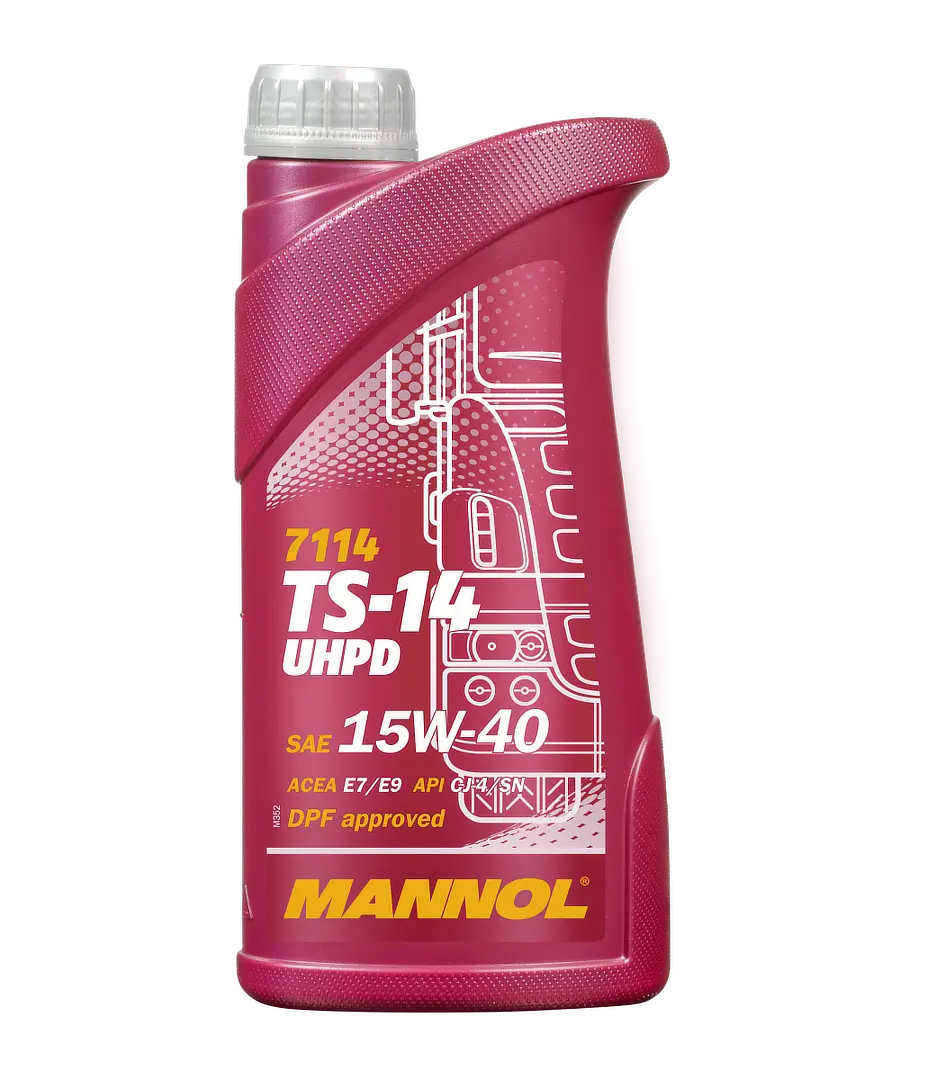
One current example is MANNOL TS-14 UHPD SAE 15W-40 API CK-4, reference MN7114. Inforca lists it in the active heavy-duty range, and the supplied 2026 product document lists 20 L and 208 L presentations. MANNOL’s manufacturer catalog also lists multiple commercial sizes for MN7114.6
That example does not establish fit for every diesel engine, and it does not establish current stock. The engine maker’s requirement, current technical documentation, exact presentation, quantity, and availability all need confirmation.
For light-vehicle programs, Inforca shows MANNOL and PureGuard options across common full-synthetic and synthetic-blend viscosities.5 Package formats vary by product. Send the exact requirement and monthly use rather than assuming a drum or tote exists for the full range.
What should you send when requesting a bulk oil quote?
Send enough information for the supplier to identify both the lubricant and the supply format.
- Business type and delivery ZIP code.
- Vehicles or equipment served.
- Required viscosity and specification for each oil.
- Current product, if known.
- Monthly usage by exact product.
- Preferred package or delivery format.
- Storage and receiving limitations.
- Required date.
- Current order sheet if several products are involved.
Inforca coordinates lubricant orders from Doral across Florida and asks buyers to provide the application, viscosity, specification, or product used today.7 Delivery area, lead time, minimums, pricing, and stock remain quote-specific.
Frequently asked questions about buying engine oil in bulk
Can an individual buy a drum of motor oil?
Possibly, if a supplier sells the requested product and format to that customer. A drum requires suitable transport, handling, storage, dispensing, spill control, and a plan for the empty container and used oil.
Can I buy 5W-30 engine oil in bulk?
Yes, 5W-30 is sold in commercial formats by some manufacturers and suppliers. Confirm the complete API, ILSAC, ACEA, or OEM requirement because not every 5W-30 is interchangeable.
Can bulk oil be API licensed?
Yes. API licensing can apply to engine oil sold in packages or bulk.8 Verify the exact product in API’s current EOLCS directory and preserve the relevant delivery documentation.
Is bulk motor oil lower quality than bottled oil?
Container size does not determine oil quality. Product formulation, licensing or approvals, chain of custody, storage, contamination control, and correct application determine whether the oil reaches the engine as intended.
Does Inforca publish bulk prices online?
Inforca’s current site uses a quote process rather than a universal online bulk-price table. Pricing depends on the exact product, quantity, presentation, delivery requirements, and current commercial terms.
Confirm the product before the package
Send Inforca the equipment or vehicle mix, required specifications, monthly usage by product, preferred format, and delivery ZIP code. The team can identify documented MANNOL or PureGuard options and confirm current presentations, availability, and quote terms.
Sources
Footnotes
-
American Petroleum Institute, API 1525A: Bulk Engine Oil Chain of Custody and Quality Documentation, definition 3.2.3, accessed September 10, 2026. ↩
-
American Petroleum Institute, Oil Categories, accessed September 10, 2026. ↩
-
American Petroleum Institute, API 1525A overview, accessed September 10, 2026. ↩
-
American Petroleum Institute, RP 1525: Bulk Oil Testing, Handling, and Storage Guidelines, accessed September 10, 2026. ↩
-
Inforca International, Products, accessed September 10, 2026. ↩ ↩2
-
MANNOL, MANNOL Catalogue, entry 7114 TS-14 UHPD, accessed September 10, 2026. ↩
-
American Petroleum Institute, EOLCS Application and Fees, accessed September 10, 2026. ↩
Related Inforca products
Check each product's data sheet against your exact specification before ordering.
Send us the application, specification, and volume — our team will confirm the right product and format.
Talk to Inforca