


Fleet & Equipment Applications
Synthetic vs. Conventional Diesel Oil for Fleets
Synthetic diesel oil may improve cold flow, oxidation resistance, volatility, and viscosity stability, but it is worth the change only when the exact product meets every engine approval and the operational benefit exceeds the added acquisition cost. Conventional or synthetic-blend oil can remain the right choice for stable duty cycles and OEM-compliant intervals.
The API category, OEM approval, viscosity, and maintenance program matter more than the word “synthetic.”
What problem is the fleet trying to solve?
Define the reason before changing oil:
- difficult cold starts;
- sustained high oil temperature;
- turbo or deposit stress;
- excessive oil consumption;
- an approved extended-drain program;
- too many viscosities or SKUs;
- a new engine approval;
- off-road or severe-duty operation.
If no measurable problem exists, a more expensive base-oil label may not create a business return.
What can synthetic formulation improve?
Depending on the product, it may provide:
- better low-temperature cranking and pumping;
- stronger oxidation resistance;
- lower volatility;
- more stable viscosity across temperature;
- better support for long drains when approved and monitored.
These are product-specific properties. API notes that base oils vary and requires testing when licensed formulations change base stocks.1
When can conventional or blend oil be enough?
It can be appropriate when:
- it carries the required API and OEM approvals;
- ambient and operating temperatures stay within its viscosity range;
- the OEM interval is conservative and stable;
- consumption and deposits are controlled;
- the fleet changes by time before oil stress becomes limiting;
- oil analysis does not show an opportunity to extend.
“Conventional” is not a failure category. Verify the finished oil’s performance.
How should total value be measured?
Compare before and after using fleet data:
| Measure | Baseline | Pilot result |
|---|---|---|
| Oil and filter cost per service | Record | Record |
| Services per year | Record | Record |
| Downtime hours | Record | Record |
| Oil consumption/top-off | Record | Record |
| Used-oil indicators | Record | Record |
| Engine or turbo events | Record | Record |
| Fuel use under comparable routes | Record | Record |
Do not promise a drain extension or fuel saving without an approved pilot and clean comparison.
What specifications come first?
API CK-4 is a current category for high-speed four-stroke diesels and covers many earlier-category applications. API FA-4 is a lower-HTHS category for selected engines and is not backward compatible with CK-4.2
The engine maker may also require Cummins CES, Detroit Diesel, Mack EOS, Volvo VDS, Renault RLD, MB, MAN, or another approval. Match every mandatory line.
Which Inforca products support a fleet comparison?
Inforca lists both synthetic-positioned and blend heavy-duty options.3
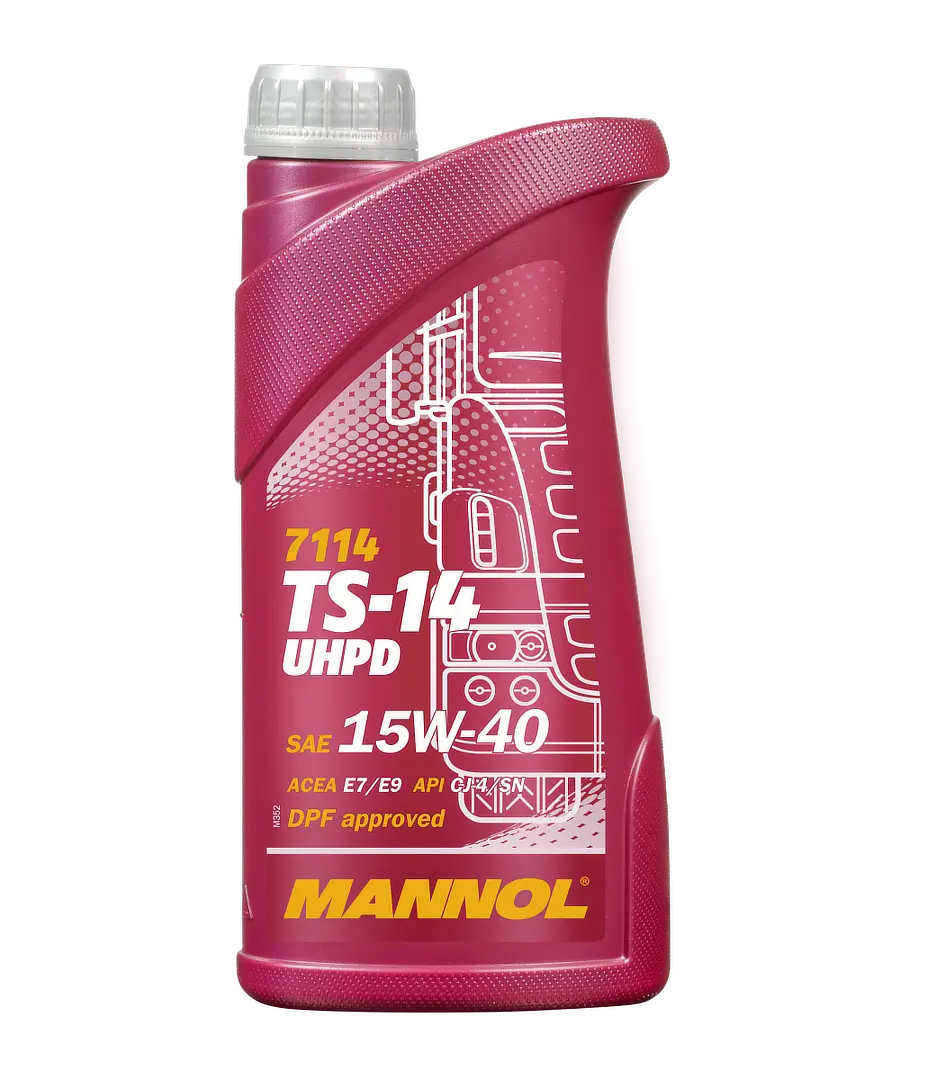
- MANNOL TS-14 UHPD 15W-40, MN7114: supplied sheet describes a semi-synthetic API CK-4 oil with ACEA and OEM coverage.
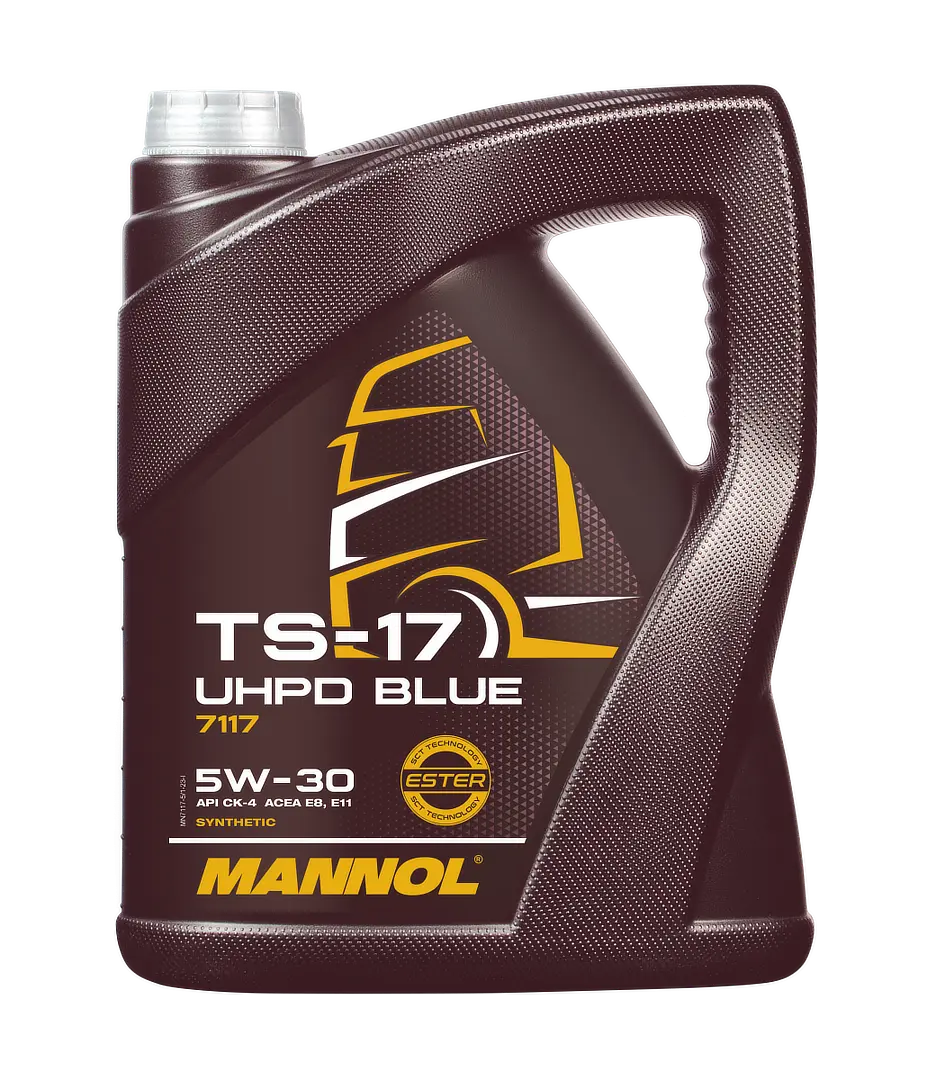
- MANNOL TS-17 UHPD 5W-30, MN7117: supplied sheet describes a synthetic API CK-4 UHPD oil.
- MANNOL TS-16 UHPD 5W-40: active public listing; confirm the current TDS.
- MANNOL TS-18 15W-40 API CK-4: active public listing; confirm base description and approvals.
- PureGuard 15W-40 synthetic blend, PG206: supplied sheet lists API CK-4/SN.
These products are not interchangeable. Confirm the engine approval, viscosity, pack size, and availability.
How should a fleet run a changeover pilot?
- Select comparable units with the same engine and route.
- Establish a clean baseline.
- Confirm OEM authorization and warranty requirements.
- Use one verified product and controlled dispensing.
- Keep the interval unchanged initially.
- Sample at consistent hours or miles.
- Review viscosity, oxidation, soot, wear metals, fuel dilution, coolant, and TBN as appropriate.
- Extend only with OEM and laboratory support.
Frequently asked questions
Does full synthetic double the drain interval?
No. The engine maker and validated program set the interval.
Does synthetic oil stop oil consumption?
It may affect volatility, but consumption can result from leaks, rings, turbo seals, duty cycle, or viscosity.
Can a fleet mix synthetic and conventional oil?
Do not make deliberate mixing the program. Match specifications and follow transition guidance.
Is synthetic always better in Florida?
High heat can favor oxidation resistance, but engine approval, temperature, load, and economics decide.
Should older trucks stay on conventional oil?
Age alone does not decide. Engine condition, seals, viscosity, specification, and consumption matter.
Build the comparison from fleet data
Send Inforca the engine list, required approvals, viscosity, duty cycle, current product, intervals, consumption, analysis history, monthly volume, and package formats. The team can build a documented shortlist for a controlled pilot.
Sources
Footnotes
-
American Petroleum Institute, Base Oil Interchangeability Guidelines, accessed September 10, 2026. ↩
-
American Petroleum Institute, Oil Categories, accessed September 10, 2026. ↩
-
Inforca International, Products: Engine and Motor Oils, accessed September 10, 2026. ↩
Related Inforca products
Check each product's data sheet against your exact specification before ordering.
Send us the application, specification, and volume — our team will confirm the right product and format.
Talk to Inforca