


What Is Automatic Transmission Fluid Used For?
Automatic transmission fluid, or ATF, is used as a hydraulic fluid, friction-control fluid, lubricant, coolant, and, in torque-converter automatics, a power-transfer medium. One fluid performs several jobs, so the correct ATF is defined by the transmission manufacturer’s specification, not by color or the word “automatic.”
ATF may also be specified in certain manual transmissions, power-steering systems, transfer cases, or hydraulic systems. That does not make it a general-purpose substitute. Use it outside an automatic transmission only when the equipment maker names the exact fluid or specification.
Where is ATF used inside an automatic transmission?
ATF circulates through the sump, pump, valve body, torque converter, clutch circuits, cooler, and lubrication passages. Its role changes as it moves.
| Location | ATF’s job |
|---|---|
| Torque converter | Transfers engine torque through fluid motion and supports converter-clutch operation |
| Pump and valve body | Carries hydraulic pressure to control elements |
| Clutches and bands | Provides calibrated friction during engagement and release |
| Gears, bearings, and bushings | Lubricates loaded and rotating parts |
| Cooler and case | Carries heat away from the unit |
| Seals and internal surfaces | Supports hydraulic sealing and helps resist deposits, corrosion, oxidation, and foam |
ZF describes transmission oil as a lubricant, hydraulic working medium, friction-control medium, and torque-transfer fluid.1 Mobil also identifies heat transfer as a core ATF function.2
How does ATF help an automatic transmission shift?
The transmission pump pressurizes the fluid. Valves and electronically controlled solenoids route that pressure to the clutches or bands needed for a selected gear. The fluid’s viscosity affects hydraulic response, while its friction characteristics affect how clutch materials engage.
The computer may command the shift, but the fluid often performs the hydraulic work. Incorrect viscosity or friction behavior can change shift feel and clutch operation even when the fluid is new.
Why does an automatic transmission need friction control?
An automatic transmission needs controlled friction, not the lowest possible friction. Wet clutch packs must slip briefly and then hold. The fluid must produce the response the clutch material and control calibration were designed around.
This is one reason “universal” does not mean “works in every transmission.” ZF treats transmission oil as a design element and recommends the oil specified for the unit.3
Does ATF cool the transmission?
Yes. ATF absorbs heat from the converter, clutches, bearings, and other components, then carries it toward the case or an oil cooler. High temperature can accelerate oxidation and alter viscosity and friction performance.
Fresh fluid cannot correct a blocked cooler, low level, internal slip, overload, or mechanical fault. If fluid repeatedly overheats or smells burnt, diagnose the cause.
Can ATF be used outside an automatic transmission?
Sometimes, but only by specification. Vehicle makers have used ATF in selected:
- manual transmissions;
- power-steering systems;
- transfer cases;
- hydraulic clutch or other hydraulic circuits;
- industrial or mobile equipment.
A GM owner manual, for example, specifies DEXRON-VI for both an automatic and a manual transmission in one vehicle platform, while listing different fluids for the transfer case and axle.4 Another model may make different choices.
Do not infer suitability from the component name. Confirm the exact vehicle, component, and required standard.
Is ATF the same as CVT fluid or gear oil?
No. Those fluids may share some functions, but they are formulated for different hardware.
| Fluid family | Typical application | Main caution |
|---|---|---|
| Conventional ATF | Planetary automatic with hydraulic clutches and often a torque converter | Match the exact OEM ATF requirement |
| CVT fluid | Belt- or chain-type continuously variable transmission | Conventional ATF is not a default substitute |
| DCT fluid | Wet dual-clutch transmission and related gearing/hydraulics | Wet and dry DCT designs differ |
| Manual-transmission fluid | Selected synchronized or unsynchronized gearboxes | May be ATF, MTF, or gear oil depending on design |
| Axle gear oil | Differentials and final drives | API GL category and SAE viscosity must match the axle |
Which Inforca products are used for automatic-transmission applications?
Inforca’s current transmission portfolio includes documented ATF and CVT options from MANNOL and PureGuard.5
| Product | Documented use position | Selection limit |
|---|---|---|
| MANNOL Automatic Plus ATF Dexron III, MN8206 | Applications requiring listed older Dexron and Mercon-quality fluids | Check the exact recommendation; not a replacement for every later ATF |
| MANNOL ATF Multivehicle JWS 3309, MN8218 | Aisin Warner-related and other applications listed in its current data sheet | Confirm the vehicle’s required standard |
| MANNOL ATF CVT, MN8216 | Listed belt- and chain-type CVT applications | Not conventional ATF |
| PureGuard Multi-Purpose ATF, PG504 | Older Dexron/Mercon-style and other listed performance coverage | Verify the current data sheet and component requirement |
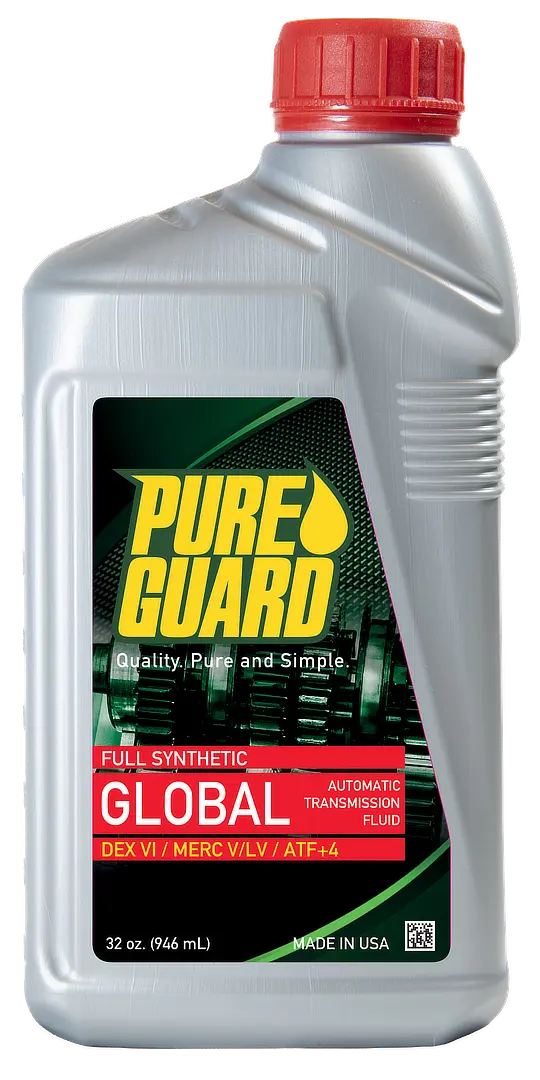
| PureGuard Full Synthetic Global ATF, PG505 | Multi-vehicle passenger and commercial applications | ”Global” does not mean every transmission |
| PureGuard SynGuard SAE 50, PG506 | Selected heavy-duty powershift transmissions | Not a passenger-car ATF substitute |
These are portfolio descriptions, not vehicle-specific recommendations. Availability and pack size must be confirmed.
What information should a buyer provide before ordering ATF?
Provide:
- Year, make, model, and engine.
- VIN when needed to identify the transmission.
- Transmission model or code.
- Required OEM fluid specification.
- Current fluid and service history, if known.
- Symptoms, leaks, or diagnostic codes.
- Service method and required quantity.
- Monthly volume and preferred pack size.
Ford warns that a fluid not meeting the defined transmission specification can reduce performance or cause damage.6 The owner or service manual is therefore the starting point.
Frequently asked questions about ATF uses
Is ATF just a lubricant?
No. It lubricates, but it also carries hydraulic pressure, controls clutch friction, removes heat, and may transfer torque.
Is all red fluid ATF?
No. Dye is not a performance specification. Fluid color also changes in service and cannot prove identity or condition.
Can ATF be used as power-steering fluid?
Only when the vehicle manufacturer specifies that exact ATF or an explicitly covered standard.
Can the wrong ATF cause shift problems?
It can alter hydraulic and friction behavior, but shift problems can also be mechanical, electrical, temperature-related, or caused by fluid level. Diagnose rather than assuming a fluid change is the cure.
Can I mix two ATFs?
Do not rely on mixability as proof of suitability. Identify the required specification and follow the product and transmission manufacturer’s service instructions.
Confirm the transmission requirement
Send Inforca the VIN or transmission code, required specification, current fluid, service quantity, monthly demand, and delivery ZIP code. The team can compare documented MANNOL and PureGuard coverage and confirm the current SKU, pack size, and availability.
Sources
Footnotes
-
ZF Aftermarket, In Brief: Transmission Oils, accessed September 10, 2026. ↩
-
Mobil, Mobil ATF 200 Product Description, accessed September 10, 2026. ↩
-
ZF Aftermarket, FAQ About Oils, accessed September 10, 2026. ↩
-
General Motors, 2016 Cadillac ATS/ATS-V Owner Manual, accessed September 10, 2026. ↩
-
Inforca International, Transmission Fluid Solutions, accessed September 10, 2026. ↩
-
Ford Motor Company, Owner Information: Transmission Fluid Capacity and Specification, accessed September 10, 2026. ↩
Related Inforca products
Check each product's data sheet against your exact specification before ordering.
-
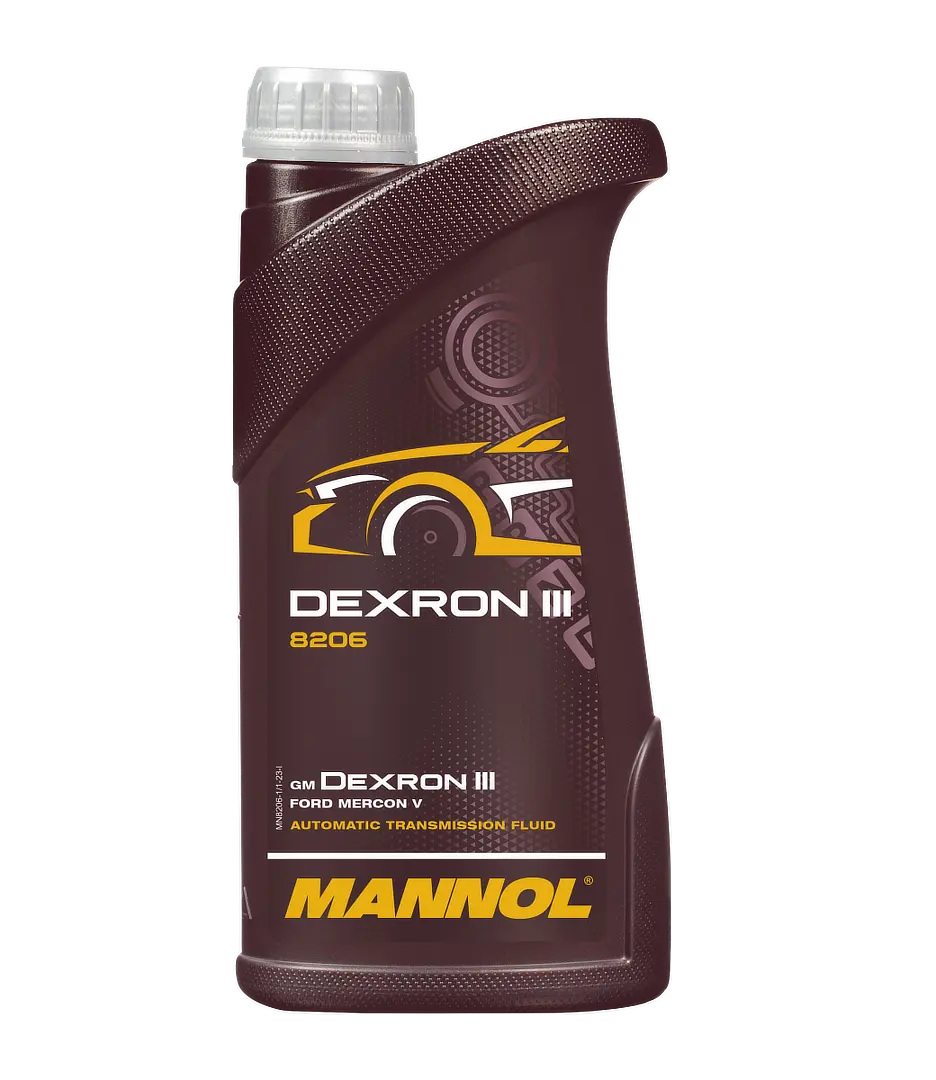 MANNOL
 Automatic Plus ATF Dexron III
Automatic transmission fluid
-
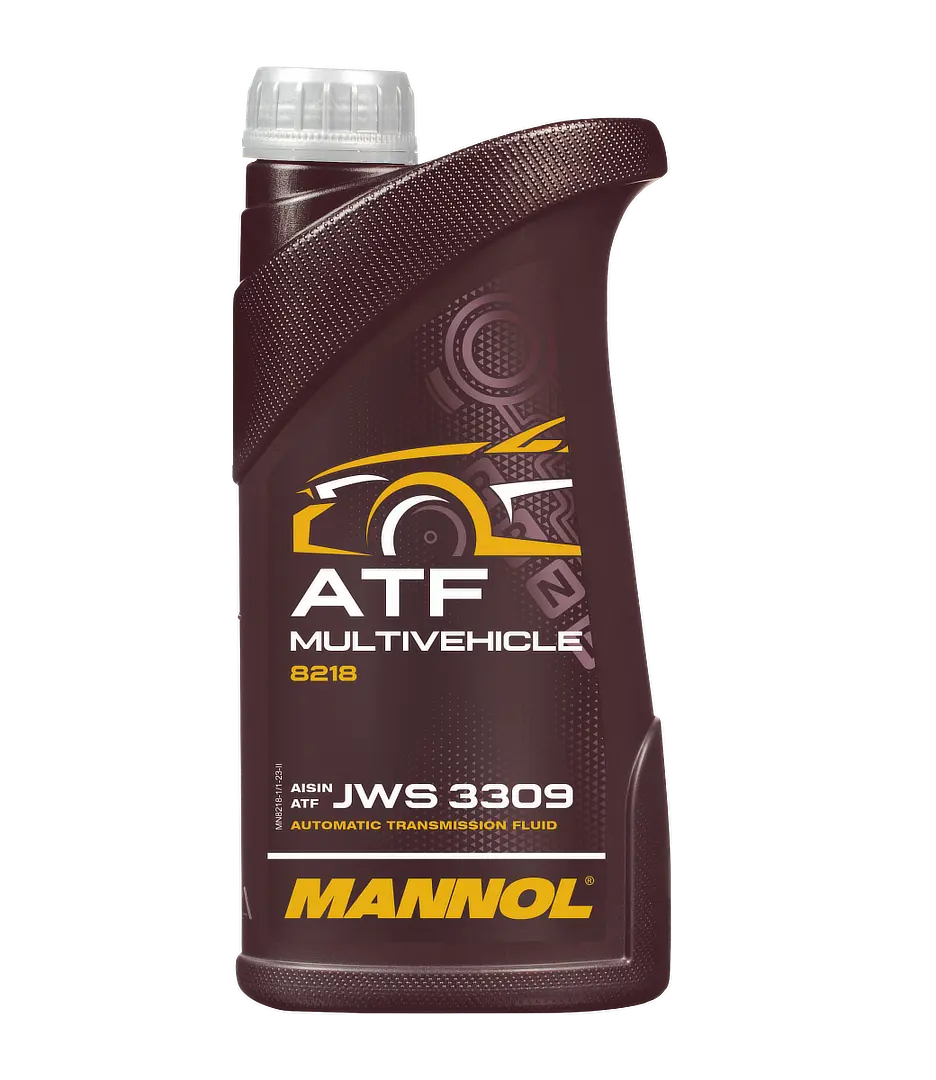 MANNOL
 ATF Multivehicle JWS 3309
Automatic transmission fluid
-
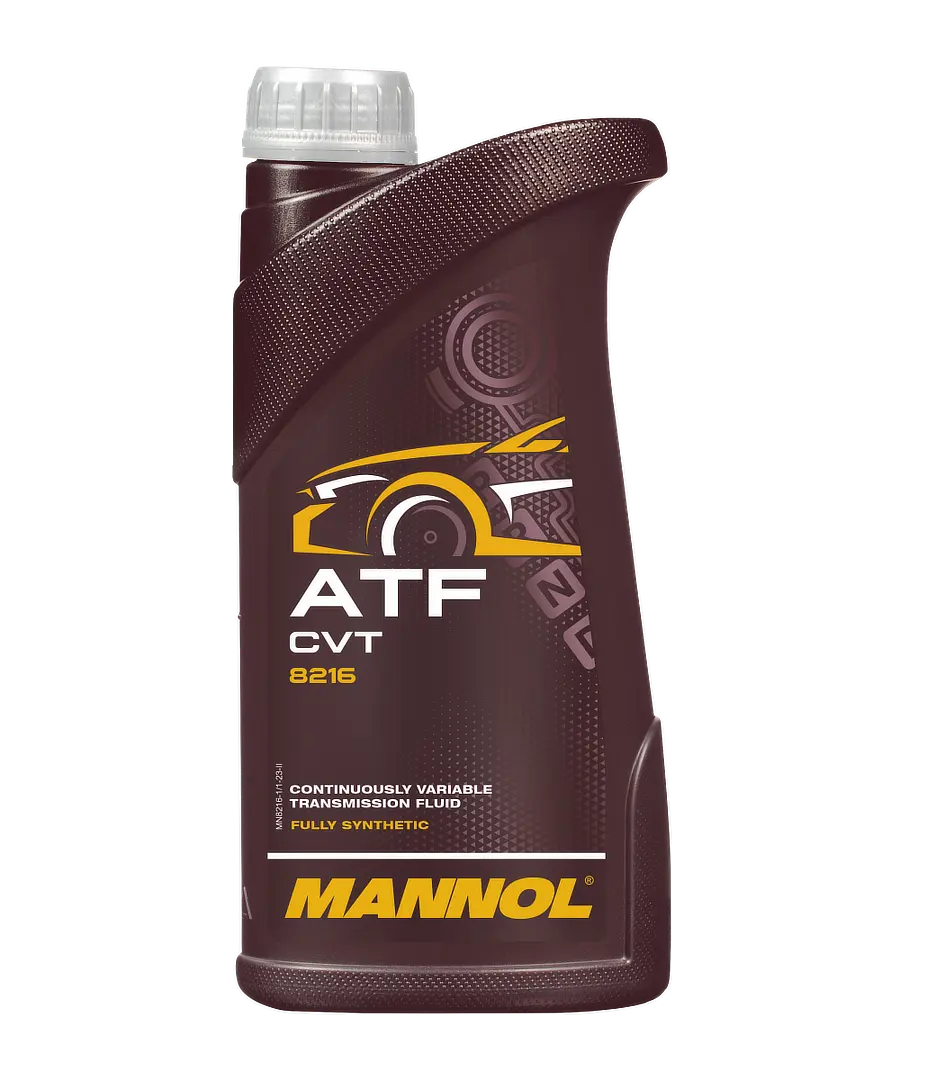 MANNOL
 ATF CVT
Automatic transmission fluid
-
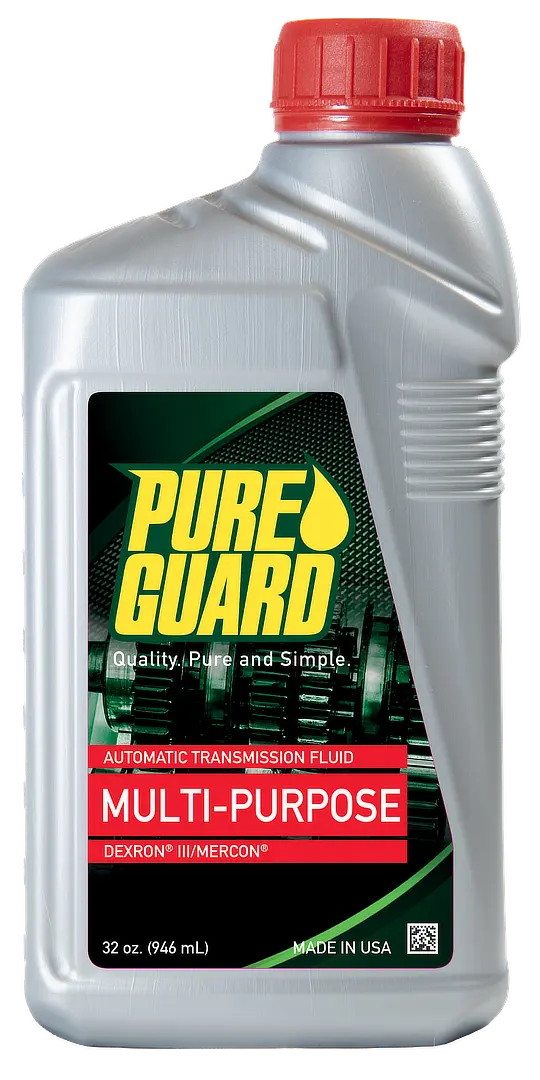 PureGuard
 Multi-Purpose ATF
Automatic transmission fluid
-
 PureGuard
 Full Synthetic Global ATF
Automatic transmission fluid
-
 PureGuard
 SynGuard Full Synthetic SAE 50
Heavy-duty powershift transmission fluid
Send us the application, specification, and volume — our team will confirm the right product and format.
Talk to Inforca